

How to Go Out in the Sun Safely: Protecting Your Baby's Skin

How to Go Out in the Sun and Keep Your Skin Safe from Sunburn and Skin Cancer?
Modern parents place great importance on developing their children's skills and growth by letting them learn through various activities. Outdoor activities in particular inevitably expose little ones to sunlight, which is up to 5 times more harmful to a child's delicate skin than an adult's, so it requires extra care and protection—especially for young children aged 2 and up. Prolonged sun exposure can cause sunburn and lead to skin cancer. To make sure kids can enjoy outdoor activities to the fullest while staying safe from the sun, let's take a look at how to protect your little one's delicate skin from the sun's harmful effects before heading out for outdoor fun.

Wear Clothing Suitable for Outdoor Activities
The hotter the weather, the less children tend to want to wear clothes, especially when they're out swimming in a pool or at the beach. Regardless, little ones should be dressed appropriately when heading out into the sun. Here's the essential gear for sun protection:
Must-Have Gear, Don't Leave These Behind
1. A hat, to protect the head, neck, ears, and face from direct sunlight
2. Loose-fitting shirts or well-ventilated pants. Nowadays there are fabrics that can reflect UV rays, offering an extra layer of sun protection for little ones—especially useful when they're playing in the water under the sun, as it helps protect the skin on the torso, chest, and back
3. Closed shoes that cover the heel and top of the foot down to the toes. The top of the foot in particular can get sunburned and painful if exposed to the sun for too long
4. UV-protective sunglasses for children. Using your eyes in bright glare is harmful to a little one's eyesight, so protect their eyes with kids' sunglasses—choose a pair that fits their face shape well, not too big or too small
Apply Sunscreen
Use a sunscreen product suited to the activity. For water sports or activities that cause heavy sweating, choose a water-resistant sunscreen, which is ideal for outdoor activities and doesn't wash off easily. It also acts as an effective shield against UVA/UVB rays, preventing them from damaging skin cells, protecting the skin's moisture balance, and keeping skin hydrated rather than dry and rough after playing in the water. For the best protection, however, sunscreen should be reapplied every 2 hours.)
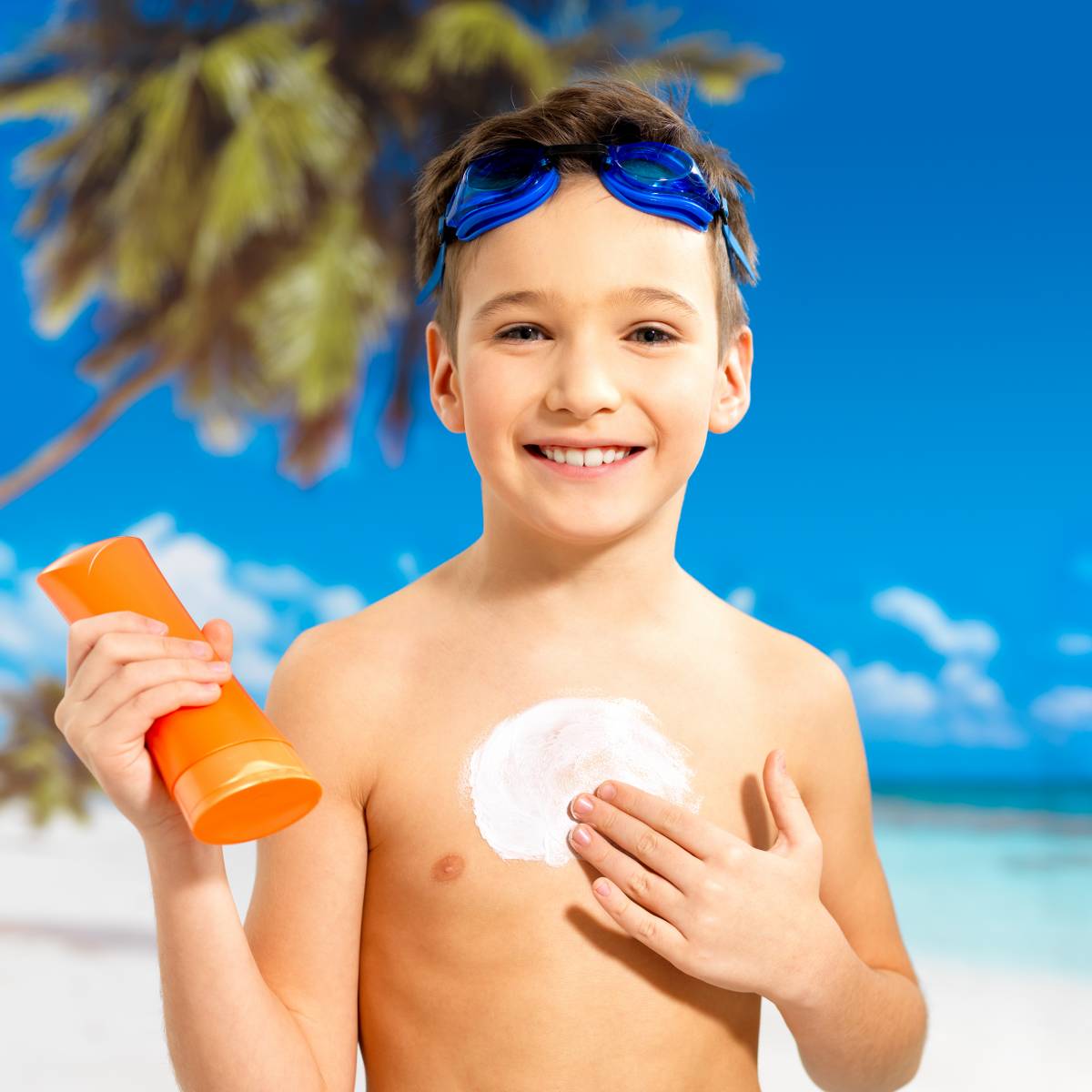
For children, it's important to choose a sunscreen made specifically for kids. A good children's sunscreen should not contain fragrance or irritating ingredients, since children's skin is easily sensitized, and it should be applied all over the body. At this age, kids tend to be restless and won't sit still, making it hard to apply sunscreen—especially while they're playing, where just catching them to apply it can be exhausting. Try a roll-on sunscreen lotion with a gentle formula for children: not only does it protect the skin fully, but kids can even apply it themselves. It's easy to apply, absorbs quickly, and can simply be rolled all over the body before heading out for outdoor fun. It also provides maximum protection for a little one's delicate skin against UVA/UVB rays, plus it contains panthenol to help replenish skin moisture and repair skin damaged and dried out by the sun, all with high water resistance—letting little ones enjoy every activity to the fullest. It's convenient to carry and use anywhere, for every activity.

Avoid Intense Sunlight
You should avoid intense sunlight between 10:00 a.m. and 3:00 p.m. This is when ultraviolet radiation levels are at their highest, so if possible, avoid going out in the sun during this time.
This is the period when up to 60% of the sun's UV radiation reaches us, and it's also when UVB rays are at their most intense—UVB being the main cause of sunburn. If you're taking your kids to the beach on a day off, try switching to water activities in the morning or in the late afternoon from 4:00 p.m. onward, and building sandcastles on the beach instead. Besides being less hot, morning sunlight also helps the body produce vitamin D, and the atmosphere is nicer too. Don't forget to reapply sunscreen every 1-2 hours.
Nourish and Restore Skin After Prolonged Sun Exposure
After being out in the sun, apply a restorative lotion. Applying lotion after sun exposure helps soothe the skin and replenish its moisture, while nourishing and repairing it back to its original condition as quickly as possible. Alternatively, choose a sunscreen that contains built-in nourishing and soothing ingredients, such as pure vitamin E or aloe vera.
In addition, sun protection needs to be a daily habit, not just something done during outdoor activities or beach trips. In fact, children can be exposed to UV rays every day, even on days spent at home. So sunscreen should be applied to children regularly.


How to Restore Skin Darkened by the Sun
Avoid Repeated Exposure to Strong Sunlight
You have to fix the problem at its source. The cause of dull, damaged skin is sunlight, so it must be avoided. If you have to go outside, bring out every bit of sun protection gear you have and put it all on. It might make you stand out a little, but don't worry if people stare—stay committed, because that's what it takes for truly beautiful skin!
Apply Nourishing Body Lotion
Apply it everywhere, even on areas you wouldn't think get sun exposure, like skin covered by clothing. Even though the skin tone there might not seem to change much, it can still be hiding dryness and damage. For those who think this sounds like a hassle, here's one product recommendation guaranteed to win you over: an easy-to-use brightening lotion with a concentrated serum texture that's still lightweight and absorbs quickly. It helps restore dull, damaged skin to a naturally radiant glow while firming the skin for a smoother look.
Natural Facial Care Recipes, Such As:
Yogurt or fresh milk help soothe the skin and nourish it to look smooth and soft. To use yogurt, apply it as a mask until it dries, then rinse off. For fresh milk, soak a cotton pad and wipe it over the face, leave it on for a while, then wash your face as usual.
Cucumber or aloe vera help reduce roughness caused by the sun. Slice or blend the cucumber or aloe vera and apply it as a mask for 15-20 minutes. If fresh isn't convenient, a ready-to-use extract works just as well too.
Scrubbing Is Fine... But Go Easy
Wait until your skin has recovered before doing a full scrub. In the meantime, you can gently exfoliate with a sponge or soft brush. Ideally, do this on a day when you're staying home, so your skin can rest and continue to recover without being damaged again by the sun.
Apply Sunscreen
If you think that once your skin is already dark you can do whatever you want because it can't get any worse... you're wrong! You should still always wear sunscreen so the dark, damaged skin doesn't set in even deeper—and it also helps your skin return to its original brightness more quickly.
Tips! If your house is open and airy with a lot of light coming in, you should still wear sunscreen even if you're not going anywhere—because UV rays can still damage your skin just as much as being outside. See, it's really not that hard, but you need discipline and to do it consistently. Then bright, radiant skin will return before long—no need for a doctor to confirm it!
Going out in the sun without damaging your skin: for those who love outdoor activities or often find themselves in hot weather, did you know that ultraviolet radiation in sunlight is the very thing that damages skin, destroying collagen and elastin in the dermis, causing wrinkles, freckles, dark spots, and dull-looking skin? If we protect our skin well before heading out into the sun, we can be confident that every outdoor activity will be fun and worry-free. If we protect our skin well before heading out into the sun, we can be confident that every outdoor activity will be fun and worry-free. Try >>>>> choosing a sunscreen that suits your lifestyle <<<<<


How to choose right color for each different skin color
This will guide and recommend you which color you should wear to make you shine bright in particularly difference in skin color.

5 Winter Styling Techniques to Look Chic for Girls
They say winter is the season for a fashion show straight from your closet, since you can wear things that would look odd in summer or the rainy season during winter like this.

Inviting Girlfriends to Cook Healthy Clean Food
Taking care of yourself isn't just about the outside — the inside matters just as much, and diet is a major factor in health. If you want beautiful skin from the inside out, plus no body odor, let's try making clean food together.